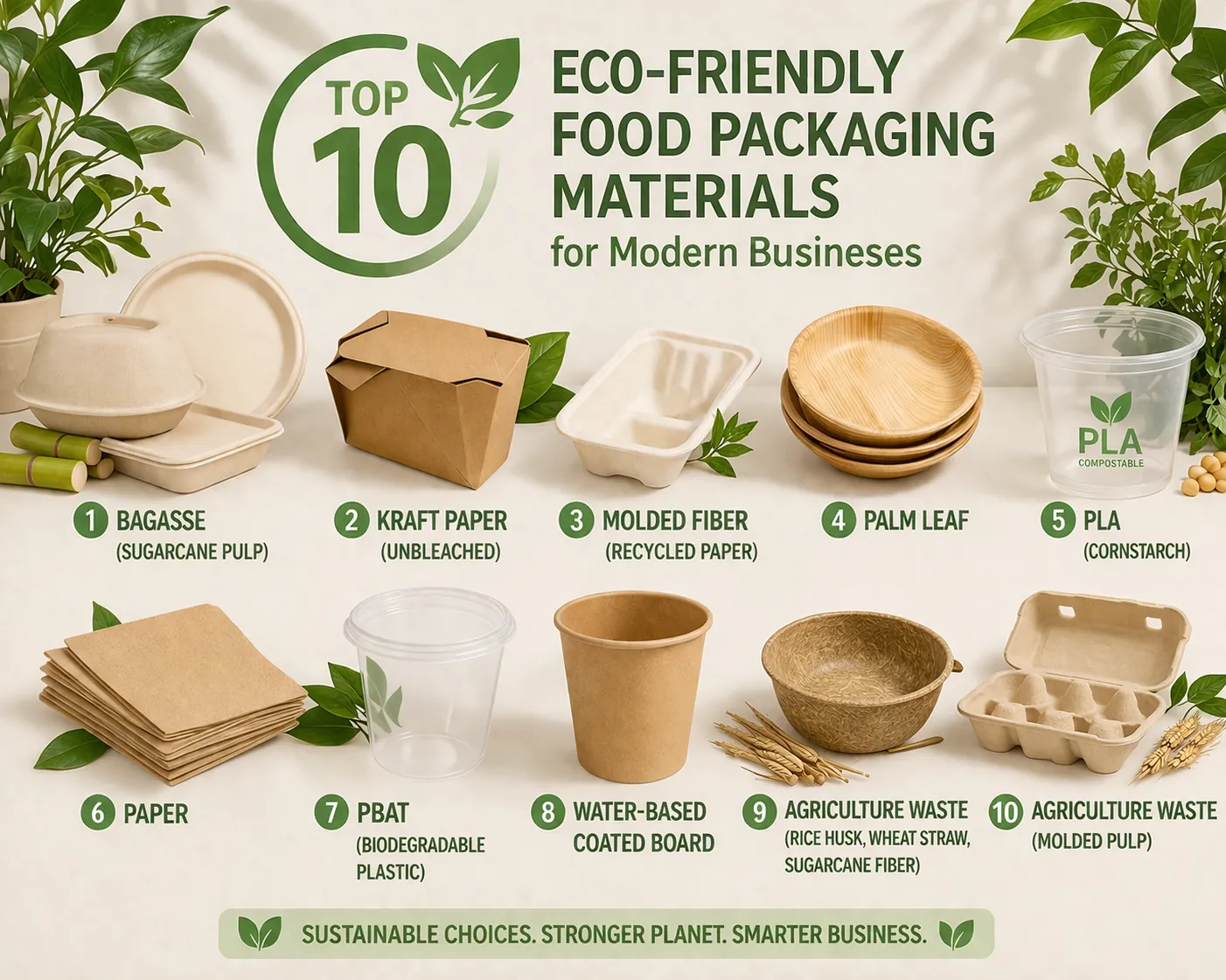
Top 10 Eco‑Friendly Food Packaging Materials for Modern Businesses
A practical, business‑focused overview of the world’s leading eco‑friendly food packaging materials—with clear pros, cons, and ideal use cases for each option.
Why Material Choice Defines Your Sustainability Story
When businesses talk about sustainability, they often highlight ingredients, operations, or energy use. Yet for food‑service brands, the packaging that reaches the customer is just as important. The material you choose for plates, bowls, cups, and takeaway containers becomes a daily, physical reminder of your environmental values.
In our in‑depth guide on eco‑friendly food packaging, we explain how market forces and regulations are driving rapid change. This article goes one step further, giving you a clear, side‑by‑side overview of the top 10 eco‑friendly food packaging materials being used globally.
For each material, we summarize how it is produced, where it performs well, and where it falls short. The goal is not to pick a single “winner,” but to help you assemble a smart, flexible portfolio of materials—with sugarcane bagasse products often playing a central role.
1. Sugarcane Bagasse
Sugarcane bagasse sits at the top of most sustainability rankings for food‑service packaging. It is a byproduct of sugar production, meaning it leverages existing agriculture rather than demanding new land or crops.
Strengths
- Excellent rigidity and heat resistance (up to ~220°F / 100°C)
- Naturally grease‑ and moisture‑resistant
- Fully compostable with strong certification support
- Ideal for plates, bowls and containers, clamshells, and meal trays
Limitations
- Natural color (off‑white / beige) may not fit every brand aesthetic.
- Requires access to composting or organic waste streams for best end‑of‑life outcomes.
For most restaurants, caterers, and distributors, bagasse is the backbone material of a sustainable packaging strategy.
2. PLA (Plant‑Based Bioplastics)
PLA, or polylactic acid, is a bioplastic derived from fermented plant starch (typically corn). It can be molded into clear cups, lids, and clamshells that look and feel very similar to conventional plastic.
Strengths
- Visually similar to PET or other clear plastics
- Industrially compostable under the right conditions
- Good option for cold drinks, salads, and display packaging
Limitations
- Temperature‑sensitive; not suitable for very hot foods
- Requires industrial composting infrastructure—home composting is rarely sufficient
- If mixed into traditional recycling streams, it can cause contamination
PLA can play a supporting role in your portfolio, especially for cold, transparent items. For hot foods, bagasse containers remain the better choice.
3–6. Paper, Recycled Cardboard, Palm Leaf, and Bamboo
Several other materials offer eco‑friendly potential when used thoughtfully:
Uncoated or Lightly Coated Paper – Widely available and familiar to consumers. However, when heavy plastic or wax coatings are applied, compostability and recyclability often suffer. This is especially important when considering compostable plates vs paper plates.
Recycled Cardboard – Excellent for outer packaging, pizza boxes, and delivery sleeves. Works best as secondary packaging combined with compostable inner containers such as bagasse plates.
Palm Leaf – Naturally shed palm leaves can be pressed into beautiful, rustic plates and bowls. Strong visual impact, but supply volume is limited and costs are often higher.
Bamboo Fiber – Fast‑growing bamboo can be processed into fiber‑based tableware. It offers decent strength but must be carefully managed to avoid monoculture farming and biodiversity concerns.
7–10. Emerging and Niche Materials
In addition to mainstream options, several emerging materials are attracting attention:
Wheat Bran & Agricultural Residues – Similar to bagasse in concept, using residual plant matter from other crops. Currently more niche, but promising in regions with strong grain industries.
Molded Pulp from Recycled Fiber – Often used for egg cartons and protective packaging. With improved coatings and designs, some manufacturers are adapting it for food‑service trays.
Seaweed‑Derived Films – Innovative films made from seaweed or algae can replace plastic wraps and sachets. Still in early stages for mass food‑service adoption.
Edible Packaging – Experimental solutions where the packaging itself can be eaten. Interesting for events and specialty products, but not yet practical at scale.
While these materials are exciting, most businesses today will get 80–90% of the sustainability benefit by focusing on proven solutions like bagasse tableware and carefully selected paper and PLA products.
Building a Practical Eco‑Friendly Packaging Mix
Rather than choosing a single "magic" material, leading brands build a balanced portfolio based on menu, budget, and local waste‑management infrastructure.
A typical configuration for a modern quick‑service or catering brand might look like this:
- Bagasse for primary food contact items: plates, bowls, clamshells, trays
- PLA or recycled PET for clear cold‑drink cups where necessary
- Recycled cardboard for outer boxes and carrier trays
- Minimal, recyclable film where required for hygiene
The more of your primary packaging you can shift to sugarcane bagasse products, the easier it becomes to tell a clear sustainability story to customers and regulators.
For a deeper dive into implementation, see our detailed guide on eco‑friendly food packaging or contact our team for a tailored consultation.
Frequently Asked Questions
What is the most eco‑friendly food packaging material?
Sugarcane bagasse is widely regarded as one of the most eco‑friendly food packaging materials because it upcycles agricultural waste, offers excellent performance for hot and cold foods, and is fully compostable with strong international certifications.
Can I use just one eco‑friendly material for all packaging?
In practice, most businesses use a mix of materials. Bagasse covers the majority of plates, bowls, and containers, while PLA or recycled plastics may be used for specific cold or transparent applications, and cardboard for outer boxes.
How do I choose the right sustainable packaging for my menu?
Start by mapping each menu item to its packaging requirements—heat, grease, portion size, and presentation. Then select materials that meet those needs while aligning with your sustainability and budget goals. Our team can help you design an optimal mix based on your region and volumes.
Related Editorial
Premium Bagasse Tableware: The Complete Guide for Businesses
Everything businesses need to know about bagasse tableware — from material science to wholesale purchasing and global distribution.
Eco-Friendly Food Packaging: A Complete Industry Guide
The definitive guide to eco-friendly food packaging — comparing materials, costs, certifications, and environmental impact for business decision-makers.

Biodegradable Food Containers: Types, Benefits, and Sourcing Guide
The definitive guide to biodegradable food containers — helping restaurants, caterers, and distributors choose the right sustainable packaging for their operations.
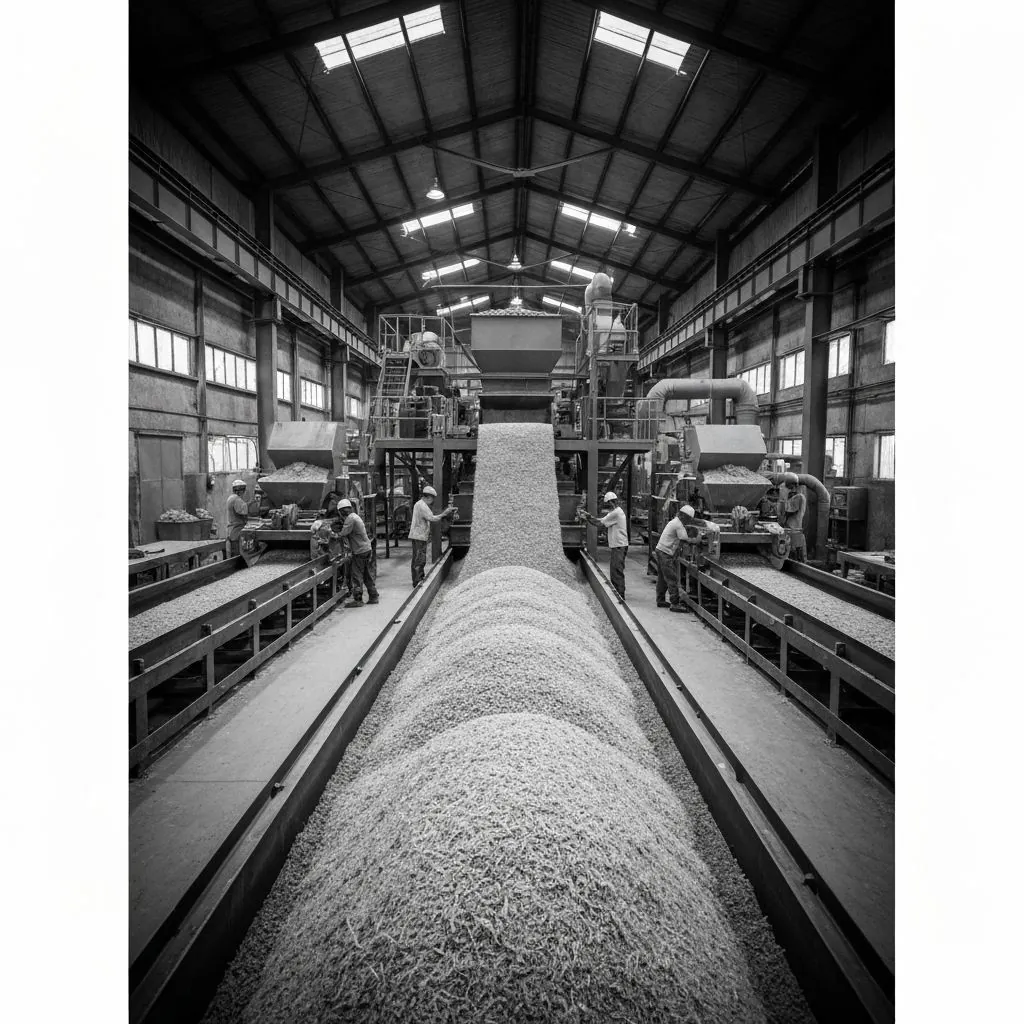
Sugarcane Bagasse Products: From Agricultural Waste to Premium Tableware
Discover how Greenmendbio transforms sugarcane agricultural waste into a comprehensive range of premium, export-quality tableware products.
Ready to Transform Your Business?
Join distributors, restaurants, and catering brands worldwide already benefiting from our sustainable sugarcane bagasse solutions.