Bagasse vs Plastic Plates: A Complete Side‑By‑Side Comparison
A practical, data‑driven comparison of bagasse and plastic plates—covering performance, food safety, costs, regulations, and long‑term sustainability for food‑service businesses.
Why This Comparison Matters Now
For decades, plastic plates were the default choice for quick‑service restaurants, caterers, and event organizers. They were cheap, lightweight, and readily available. However, the world has changed. Governments are banning single‑use plastics, consumers are more informed, and brands are judged on their environmental footprint.
At the same time, bagasse tableware has matured from a niche alternative into a globally accepted standard. High‑volume manufacturing in markets like India has driven down costs and improved consistency, allowing bagasse to compete directly with plastic on both price and performance.
Comparing bagasse vs plastic plates is therefore not just an environmental question; it is a strategic business decision that affects compliance, customer loyalty, operational risk, and long‑term profitability.
Material Science: What Are You Really Serving On?
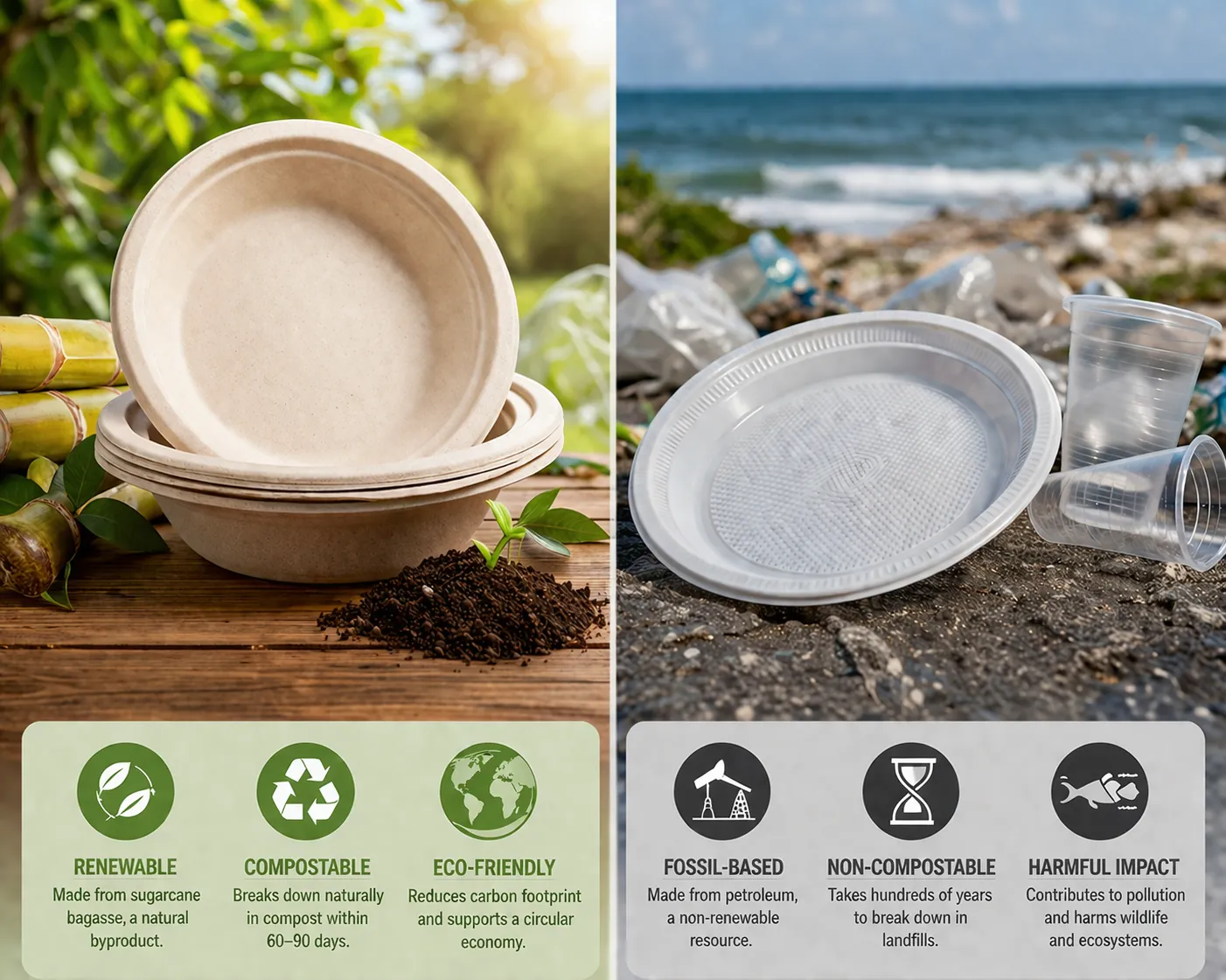
Plastic plates are typically made from petroleum‑derived polymers such as polystyrene (PS), polypropylene (PP), or polyethylene terephthalate (PET). These materials are highly durable and do not break down easily in the natural environment. When discarded, they can persist for hundreds of years, fragmenting into microplastics that contaminate soil, waterways, and food chains.
Bagasse plates, by contrast, are made from the fibrous residue of sugarcane. They are naturally biodegradable and, when properly composted, return to the soil as nutrient‑rich organic matter. Their structural strength comes from densely packed plant fibers rather than synthetic polymers.
From a material‑science perspective, the key difference is reversibility: plastic is effectively permanent, while bagasse is designed to re‑enter natural cycles. This single distinction underpins almost every advantage bagasse holds in the eco‑friendly food packaging conversation.
Performance in Real Food‑Service Conditions
Performance is the first concern of chefs, caterers, and operations managers. Plates must hold food securely, resist heat and grease, and feel sturdy in the hand.
Heat Resistance – Bagasse plates comfortably handle hot dishes, curries, and fried foods up to approximately 220°F (100°C). Many plastic plates, especially thin polystyrene versions, soften or deform at high temperatures and are not recommended for microwave use.
Grease and Moisture Resistance – Bagasse’s dense fiber structure and high‑pressure molding create natural resistance to oils and liquids. Unlike low‑grade paper plates, they do not quickly soak through. Plastic plates are of course waterproof, but this comes at the cost of long‑term environmental persistence.
Rigidity & Comfort – Well‑designed bagasse plates feel substantial and do not flex excessively under load. Customers often describe them as "premium" or "restaurant‑quality." Thin plastic plates can feel flimsy and may bend under heavy meals.
In blind operational tests with our partners, bagasse plates routinely scored equal to or higher than plastic plates on stability and overall diner satisfaction.
Food Safety and Health Considerations
Plastic plates are generally approved for food contact, but health concerns arise when they are exposed to heat, oil, and prolonged contact times. Certain plastics can migrate small amounts of chemicals into food, especially when heated in microwaves or used with very hot dishes.
High‑quality bagasse plates, like those manufactured by Greenmendbio, are free from BPA, phthalates, and other controversial additives. They do not require synthetic coatings to resist grease and moisture.
Our plates are tested and certified in line with international food‑safety and compostability standards. For businesses that position themselves as health‑conscious or family‑friendly, bagasse provides a clearer, more reassuring safety story than plastic.
Environmental Impact and Regulatory Pressure
Around the world, regulators are tightening rules on single‑use plastics. More than 127 countries have implemented some form of plastic restriction, and that number continues to rise. Many cities and regions now specifically encourage or even mandate the use of biodegradable food containers and compostable plates.
Plastic plates, even when technically recyclable, are rarely recycled in practice. Food contamination and sorting challenges mean they often end up in landfills or incinerators. Bagasse plates, on the other hand, are widely accepted in composting programs, and their organic origin ensures they break down into harmless natural components.
Switching from plastic to bagasse therefore reduces regulatory risk, supports ESG reporting, and resonates strongly with environmentally conscious customers.
Cost, Branding, and Customer Perception
One of the most common questions we hear from distributors and restaurant owners is: "Are bagasse plates more expensive than plastic?" The honest answer is: sometimes slightly on a unit basis, but often equal or better when you consider the full picture.
Advanced, high‑volume manufacturing has narrowed the price gap significantly. For many SKUs, bagasse plates are now priced at or very close to plastic equivalents. When you add in the marketing value of visible sustainability, reduced regulatory risk, and the ability to charge a premium for eco‑friendly offerings, bagasse frequently wins in total economic value.
From the customer’s side, the perception difference is enormous. Serving food on natural‑colored, compostable sugarcane bagasse products communicates quality, care, and modern values. Plastic plates increasingly signal corner‑cutting and environmental disregard.
Which Should You Choose for Your Business?
If you are planning long‑term, the decision is clear: plastic plates belong to the past, while bagasse represents the future of responsible food service.
For businesses looking to transition smoothly, we recommend starting with high‑visibility applications such as dine‑in plates and key takeaway dishes. Once you and your customers experience the benefits firsthand, extending bagasse across your entire disposable portfolio—plates, bowls and containers, clamshells, and meal trays—becomes a natural next step.
To calculate specific cost comparisons and see how bagasse plates can fit your budget, you can request a detailed quote or speak with our team about your target markets and volume.
Frequently Asked Questions
Are bagasse plates stronger than plastic plates?
High‑quality bagasse plates are at least as strong as typical disposable plastic plates and often feel more rigid and premium in hand. They are engineered to handle hot, heavy meals without bending or leaking.
Do bagasse plates cost more than plastic?
In many cases, bagasse plates are priced very close to plastic equivalents, especially at wholesale volumes. When you consider regulatory compliance, brand value, and customer perception, bagasse plates usually deliver better overall economic value.
Which is better for the environment: bagasse or plastic plates?
Bagasse plates are significantly better for the environment. They are made from renewable agricultural waste, fully compostable, and associated with much lower greenhouse‑gas emissions compared to petroleum‑based plastic plates.
Can I replace all my plastic plates with bagasse?
Yes. Bagasse plates are suitable for most use cases where plastic plates are currently used, including hot meals, oily foods, and outdoor events. Our team can help you map each existing SKU to a compatible bagasse alternative.
Related Editorial
Premium Bagasse Tableware: The Complete Guide for Businesses
Everything businesses need to know about bagasse tableware — from material science to wholesale purchasing and global distribution.
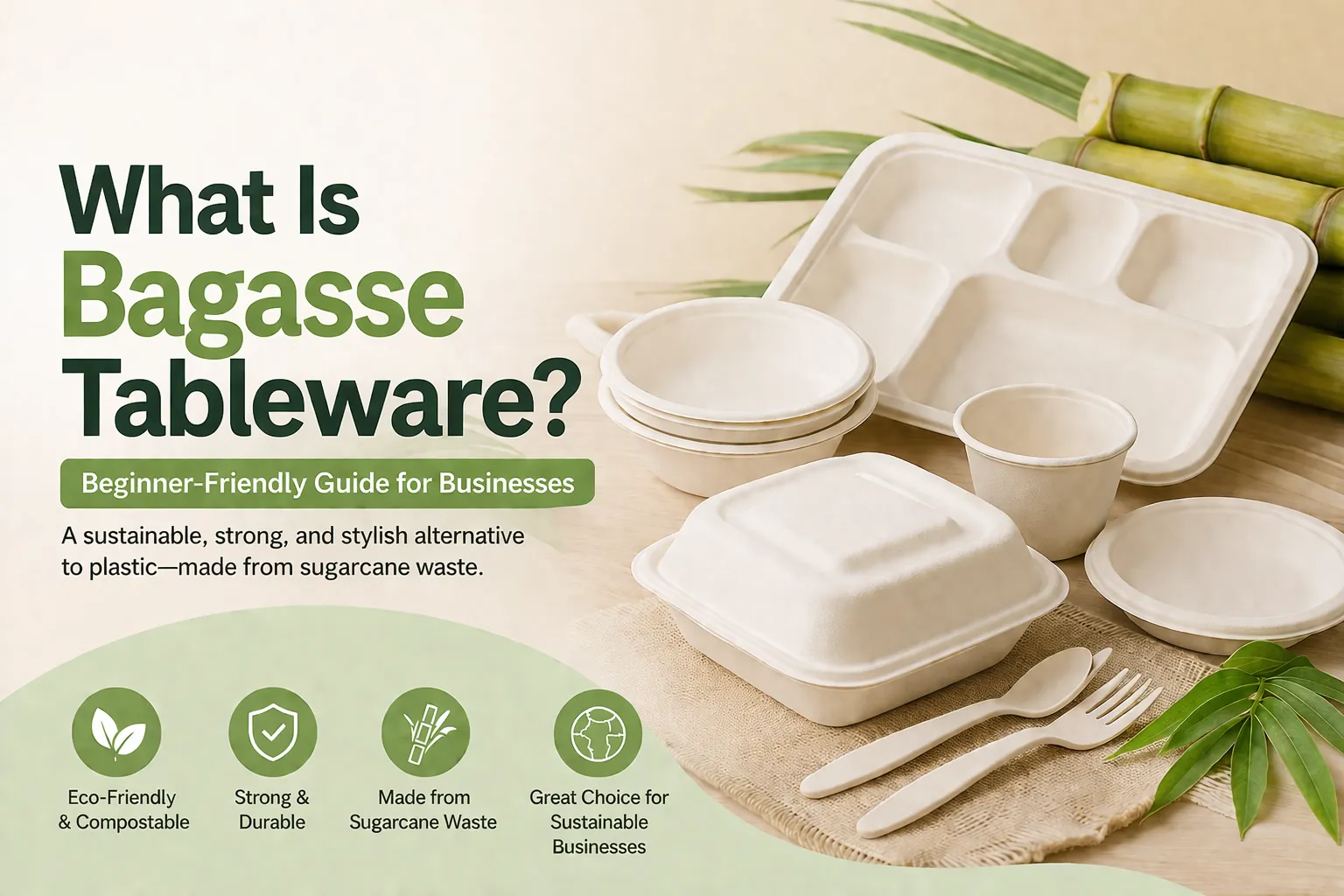
What Is Bagasse Tableware? Beginner-Friendly Guide for Businesses
A clear, non-technical explanation of bagasse tableware — what it is, how it is made, and why it has become the preferred eco-friendly alternative to plastic and paper disposables.
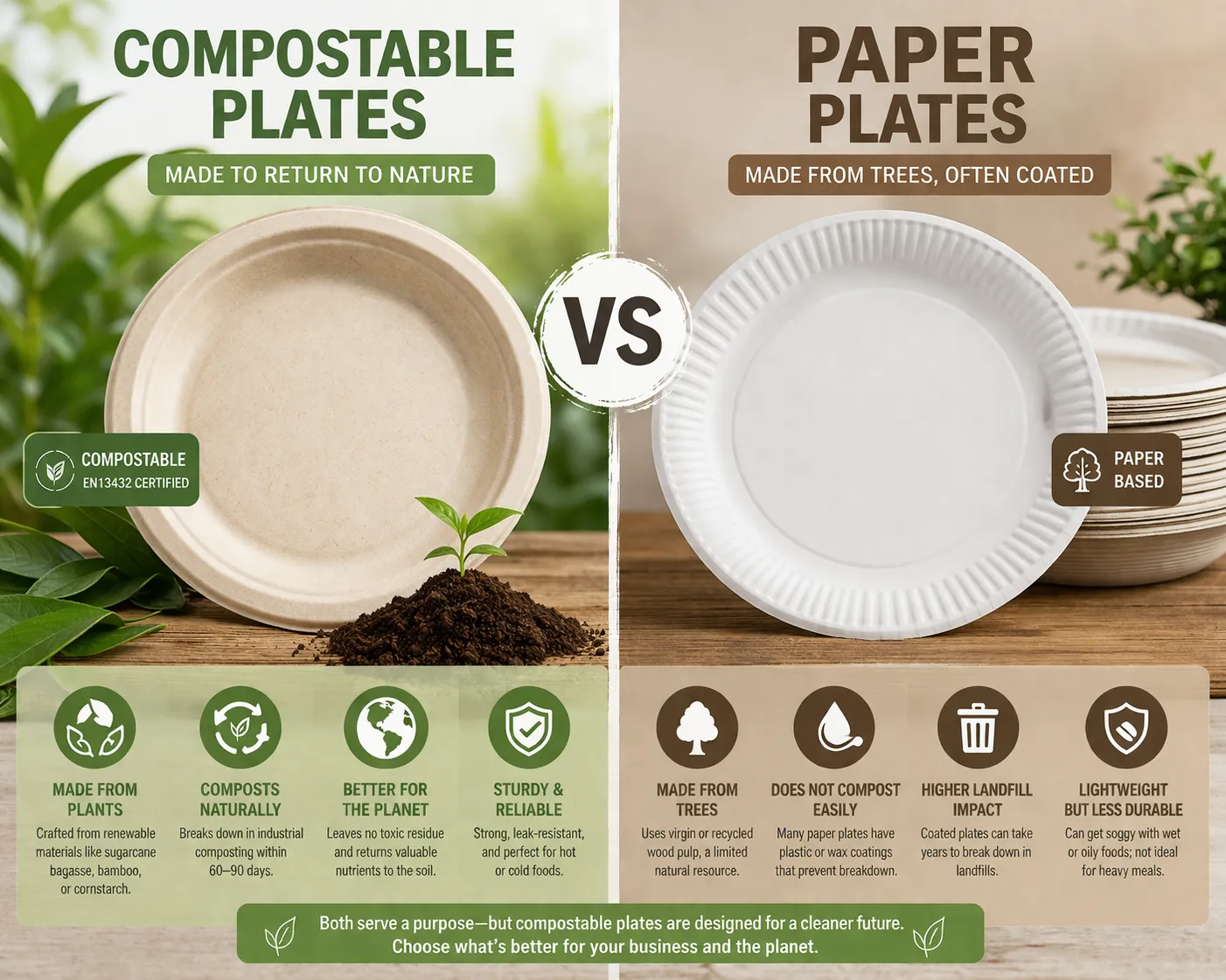
Compostable Plates vs Paper Plates: What’s the Real Difference?
Many plates are labeled as "paper," but not all are truly compostable or eco‑friendly. Learn how compostable plates—especially bagasse—compare to conventional paper options in the real world.
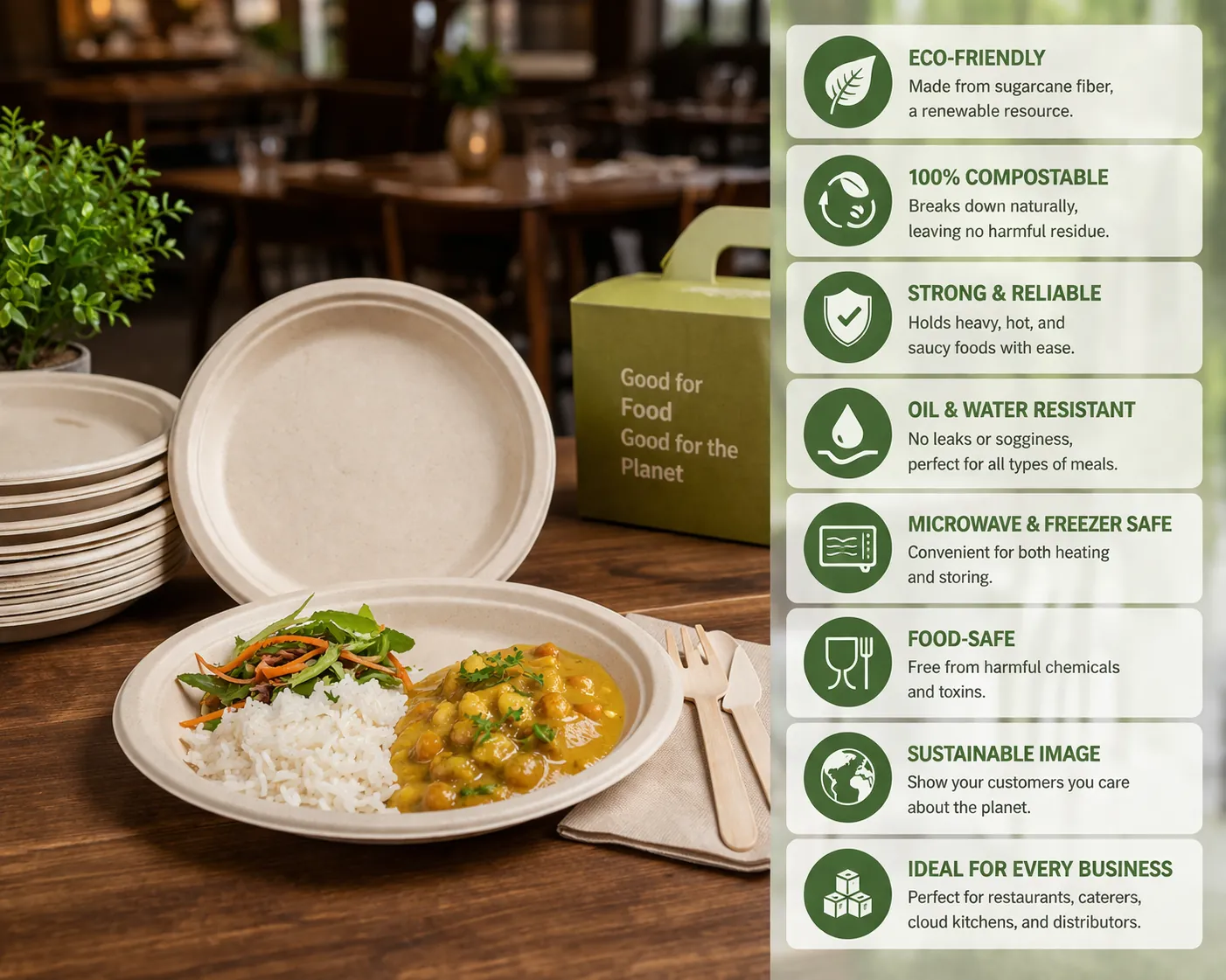
Benefits of Sugarcane Bagasse Plates for Restaurants, Caterers, and Distributors
Sugarcane bagasse plates deliver far more than eco‑credentials. Discover how they improve operations, strengthen brands, and open new market opportunities for distributors.
Ready to Transform Your Business?
Join distributors, restaurants, and catering brands worldwide already benefiting from our sustainable sugarcane bagasse solutions.