Benefits of Sugarcane Bagasse Plates for Restaurants, Caterers, and Distributors
Sugarcane bagasse plates deliver far more than eco‑credentials. Discover how they improve operations, strengthen brands, and open new market opportunities for distributors.
From Agricultural Waste to Strategic Asset
Sugarcane bagasse plates begin life as an agricultural byproduct. After sugarcane stalks are crushed for juice, the remaining fibrous mass—bagasse—was historically burned or discarded. Today, advanced manufacturing turns this material into a high‑value asset for the global food‑service industry.
This transformation aligns perfectly with the principles of the circular economy: using resources more than once, minimizing waste, and designing products for safe return to natural systems. By adopting sugarcane bagasse products, businesses tap into a supply chain that is both renewable and closely linked to existing agricultural infrastructure.
Operational Benefits in Daily Service
In fast‑paced kitchens and catering operations, tableware must perform flawlessly. Bagasse plates deliver several everyday advantages over traditional alternatives:
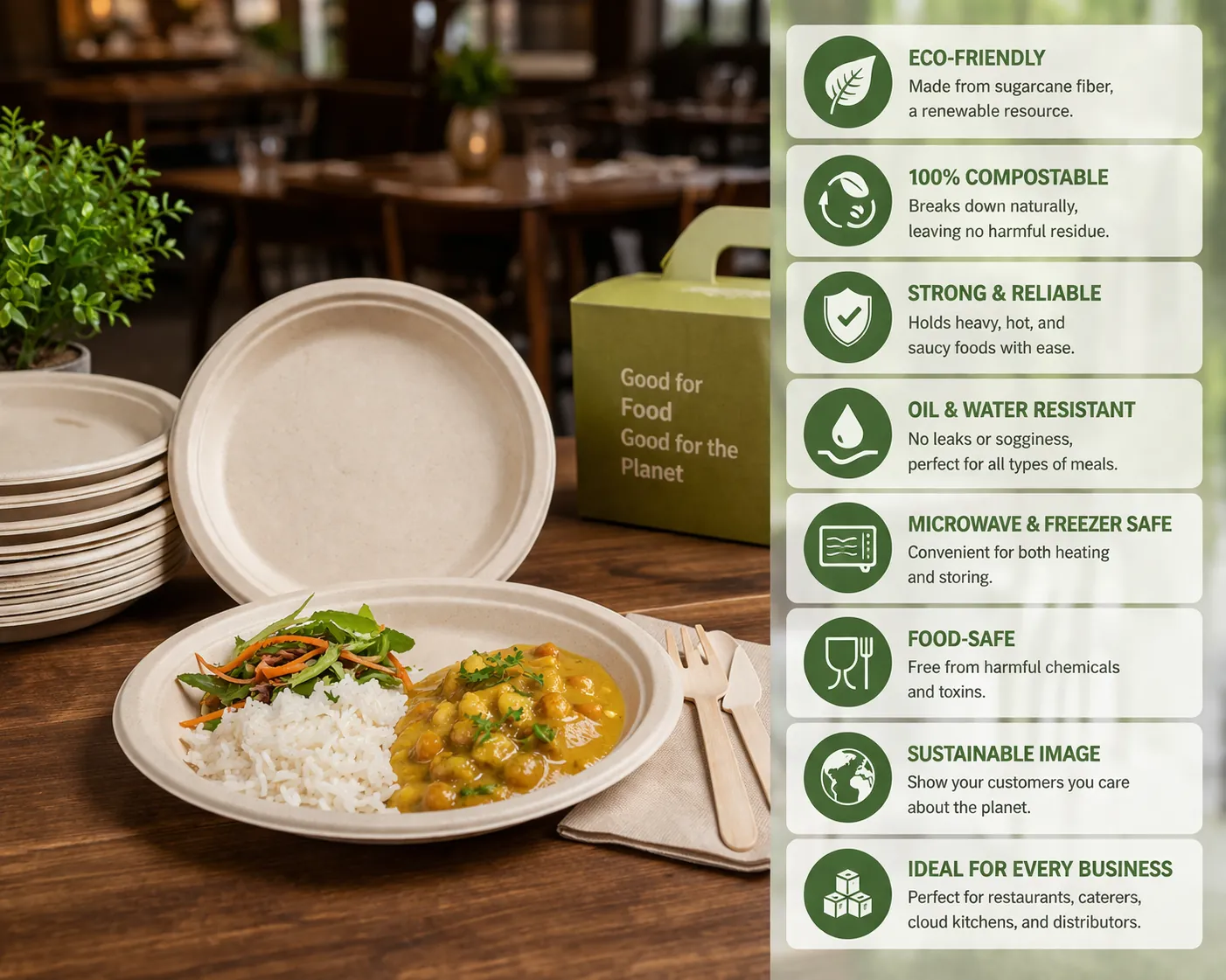
- Stability and Strength – The dense fiber structure and robust rim design of our bagasse plates prevent flexing and spillage, even with generous portions.
- Heat and Grease Resistance – Plates comfortably handle hot, oily dishes and can be used for microwave reheating—a convenience your customers expect.
- Stacking and Storage Efficiency – Uniform molding ensures plates stack neatly, saving shelf space and simplifying handling for staff.
These operational wins reduce waste from breakage or double‑plating and help kitchens run more smoothly during peak hours.
Brand and Customer‑Experience Advantages
In a crowded market, packaging is one of the easiest ways to differentiate your brand. Serving meals on natural‑looking, compostable bagasse plates immediately communicates quality and responsibility.
Customers often comment positively on the tactile feel and appearance of bagasse plates compared to shiny plastic or thin paper. This subtle upgrade can:
- Improve perceived food quality
- Justify premium positioning or pricing
- Encourage social‑media sharing of your sustainable presentation
Combined with clear messaging on menus, signage, and your website, visible use of eco‑friendly food packaging strengthens brand loyalty and supports long‑term customer relationships.
Compliance, ESG Reporting, and Future‑Proofing
Regulations around single‑use plastics are tightening every year. By transitioning to certified compostable bagasse tableware now, you reduce the risk of sudden, forced changes later.
For corporate buyers and institutional clients, sustainability metrics are no longer optional. Bagasse plates contribute positively to ESG reports by:
- Lowering scope‑3 emissions relative to plastic alternatives
- Demonstrating concrete action on waste reduction
- Supporting circular‑economy narratives in sustainability disclosures
Distributors that offer a robust bagasse portfolio are well‑positioned to win tenders and long‑term contracts with clients who prioritize measurable environmental performance.
Economics: Total Cost, Not Just Unit Price
While the unit price of bagasse plates is now close to that of comparable plastic plates, the total cost of ownership is where bagasse truly shines.
Consider the following factors:
- Fewer complaints and returns due to plate failure
- Reduced need for double‑plating with flimsy alternatives
- Marketing and branding value from sustainability messaging
- Lower regulatory and reputational risk as plastic bans expand
When you evaluate the full picture, bagasse plates frequently offer better long‑term economics than traditional options. Many of our partners have successfully transitioned entire product lines without increasing their overall packaging budget.
How Distributors Can Leverage Bagasse Plates for Growth
For distributors, bagasse plates are more than just another SKU—they are a strategic growth engine.
By building a strong assortment of bagasse plates, bowls, clamshells, and trays, distributors can:
- Win new business with sustainability‑driven prospects
- Deepen relationships with existing customers by solving real ESG challenges
- Differentiate their catalogs from competitors that still focus on conventional plastics
Our distributor success stories highlight how partners in Europe and Asia have expanded revenue and strengthened market share by leading the shift to sustainable packaging.
Frequently Asked Questions
Why should I switch from plastic to sugarcane bagasse plates?
Sugarcane bagasse plates offer better environmental performance, strong food‑service functionality, and a clearer sustainability story for your brand. They help future‑proof your business against plastic regulations while meeting customer expectations for eco‑friendly packaging.
Are sugarcane bagasse plates suitable for all types of cuisine?
Yes. Bagasse plates handle hot, cold, dry, and oily dishes across a wide range of cuisines. They are particularly well‑suited to curries, stir‑fries, grilled items, and full‑meal combinations.
Can distributors private‑label sugarcane bagasse plates?
Greenmendbio offers private‑label and custom‑branding options for qualifying order volumes, allowing distributors and large buyers to build their own sustainable brands using our manufacturing expertise.
Related Editorial
Premium Bagasse Tableware: The Complete Guide for Businesses
Everything businesses need to know about bagasse tableware — from material science to wholesale purchasing and global distribution.
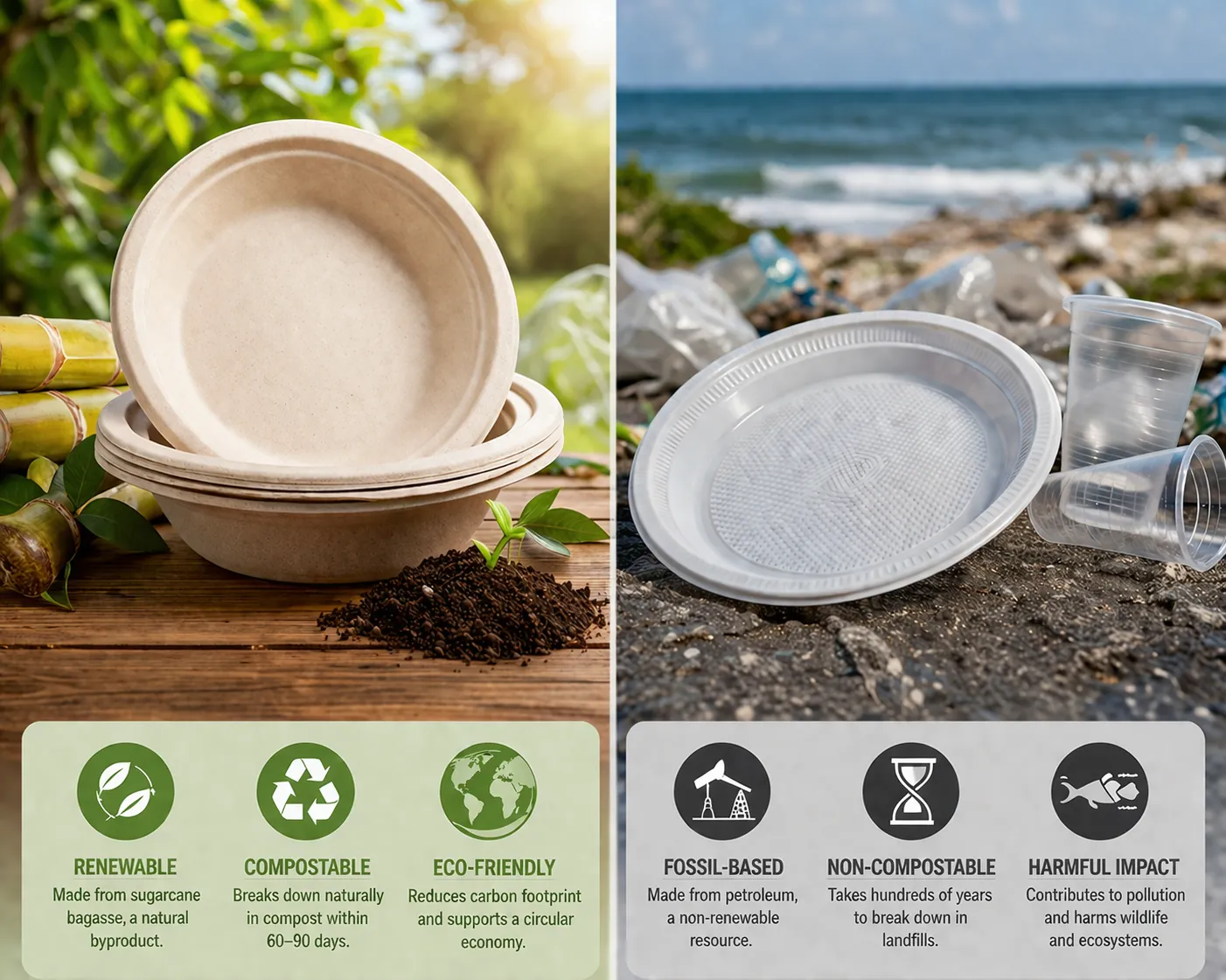
Bagasse vs Plastic Plates: A Complete Side‑By‑Side Comparison
A practical, data‑driven comparison of bagasse and plastic plates—covering performance, food safety, costs, regulations, and long‑term sustainability for food‑service businesses.
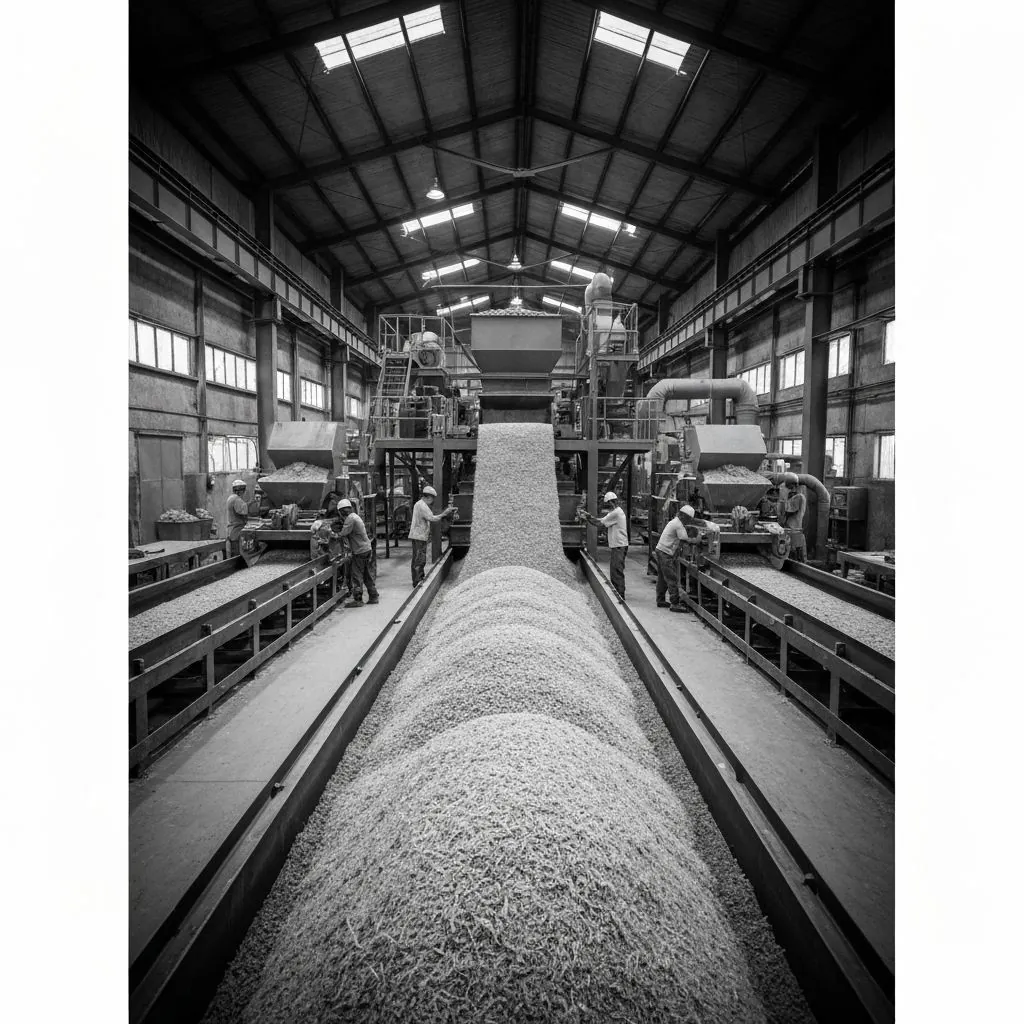
Sugarcane Bagasse Products: From Agricultural Waste to Premium Tableware
Discover how Greenmendbio transforms sugarcane agricultural waste into a comprehensive range of premium, export-quality tableware products.
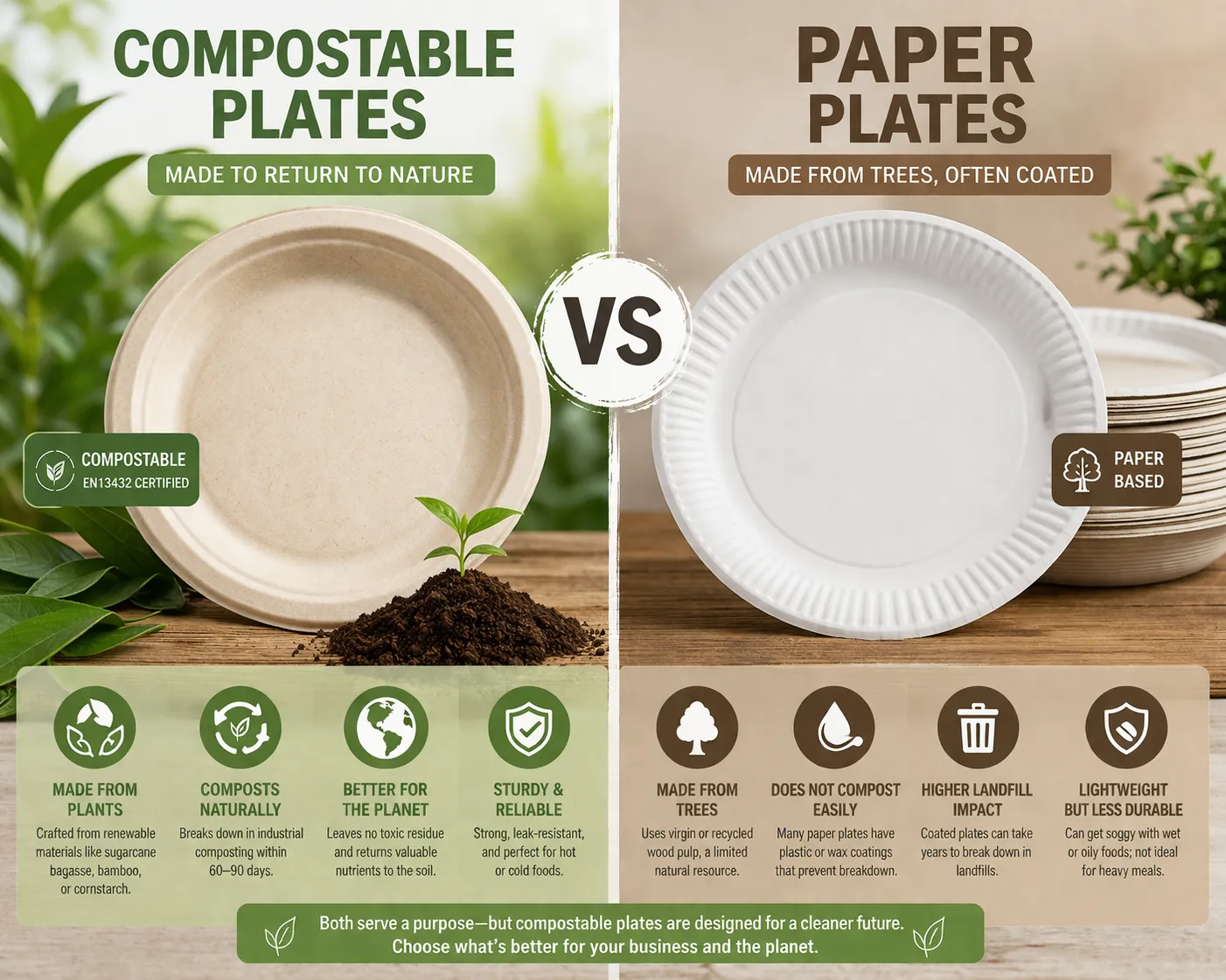
Compostable Plates vs Paper Plates: What’s the Real Difference?
Many plates are labeled as "paper," but not all are truly compostable or eco‑friendly. Learn how compostable plates—especially bagasse—compare to conventional paper options in the real world.
Ready to Transform Your Business?
Join distributors, restaurants, and catering brands worldwide already benefiting from our sustainable sugarcane bagasse solutions.