Compostable Plates vs Paper Plates: What’s the Real Difference?
Many plates are labeled as "paper," but not all are truly compostable or eco‑friendly. Learn how compostable plates—especially bagasse—compare to conventional paper options in the real world.
Why the Label "Paper Plate" Can Be Misleading
Walk through any supermarket aisle and you will see countless plates marketed as "paper." At first glance, they appear eco‑friendly—after all, paper comes from trees, and trees are natural. The reality is more complex.
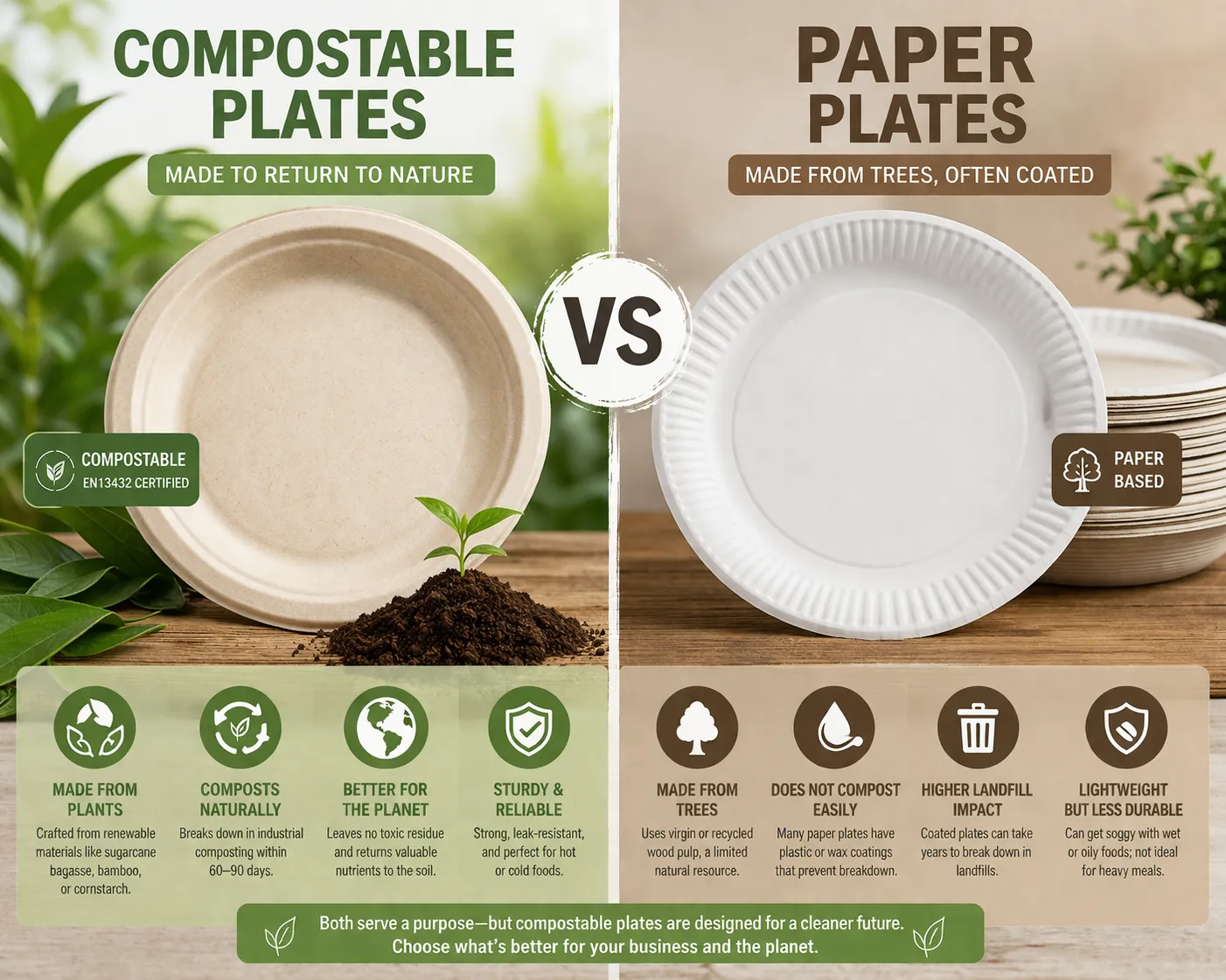
Many so‑called paper plates are heavily coated with polyethylene (plastic), wax, or other barrier layers to prevent them from absorbing oil and liquids. These coatings make the plate behave very differently in waste streams: instead of breaking down quickly, they may linger, shed microplastics, or contaminate recycling systems.
Genuinely compostable plates, especially those made from bagasse tableware, are designed from the ground up to decompose into organic matter without leaving toxic residues. Understanding this difference is essential if your goal is to reduce environmental impact rather than simply swap one type of disposable for another.
Material and Coating Differences
Conventional paper plates typically start with a paper or cardboard substrate. To survive real‑world food‑service conditions, manufacturers often apply a plastic or wax coating to the surface. This adds water and grease resistance, but it also:
- Complicates recycling, because the plastic must be separated from the fiber
- Slows down or prevents biodegradation in composting environments
- Can introduce concerns about chemical migration, especially with hot foods
Compostable plates made from sugarcane bagasse products take a different approach. The natural fiber structure and high‑pressure molding process create inherent strength and resistance without heavy synthetic coatings. Any additional treatments used by reputable manufacturers are chosen specifically to maintain compostability and compliance with international certifications.
Performance: Strength, Heat, and Grease
From a practical standpoint, any plate you choose must perform in the hands of your customers.
Strength – High‑quality bagasse plates feel substantial and can hold generous servings of food without flexing or buckling. Lower‑grade paper plates often need to be doubled for heavier dishes, increasing waste and cost.
Heat Resistance – Compostable bagasse plates handle hot foods, oven‑warm dishes, and microwave reheating with ease. Many paper plates, especially coated ones, are not recommended for microwave use and can deform under high temperatures.
Grease Resistance – The dense fiber matrix in bagasse provides impressive resistance to oils and sauces, making them ideal for curries, stir‑fries, and deep‑fried items. Paper plates rely heavily on surface coatings; once those are compromised, the plate quickly becomes soggy.
End‑of‑Life: Compostability vs Wishful Recycling
One of the biggest advantages of compostable plates is clarity at the end of their life. When a plate is independently certified as compostable and used in an appropriate composting environment, you can be confident it will break down into harmless organic matter.
Paper plates with plastic coatings occupy a gray area. Technically, the paper portion may be recyclable, but in practice, food contamination and the difficulty of separating layers mean that most coated plates end up in landfills or incinerators.
By contrast, certified compostable plates made from bagasse integrate smoothly into organic waste systems. When collected alongside food scraps and other compostable packaging, they support a circular model where yesterday’s tableware becomes tomorrow’s soil.
Our range of compostable plates is designed specifically with this end‑of‑life pathway in mind.
Choosing the Right Plate for Your Brand
When deciding between compostable and conventional paper plates, consider the following questions:
- What waste infrastructure is available in your region? If industrial composting is accessible, certified compostable bagasse plates are an excellent choice.
- How do you want customers to perceive your brand? Visible use of eco‑friendly food packaging sends a strong message about your values.
- What is the real total cost? If you routinely double up flimsy paper plates or deal with customer complaints about leaking and bending, a sturdy compostable plate may actually reduce your per‑meal cost.
In most professional food‑service environments, compostable bagasse plates offer a more consistent, future‑proof solution than conventional coated paper.
Frequently Asked Questions
Are all paper plates compostable?
No. Many paper plates are coated with plastic or wax to resist grease and moisture. These coatings can prevent proper composting and may leave behind microplastics. Always look for independently certified compostable products.
Are bagasse plates considered paper plates?
Bagasse plates are fiber‑based like paper, but they are made from sugarcane residue rather than wood pulp. They behave differently from many traditional paper plates because they do not rely on heavy plastic coatings for performance.
Can I compost bagasse plates at home?
Yes, bagasse plates can be composted at home under the right conditions, although the process is slower than in industrial facilities. Shredding or breaking plates into smaller pieces accelerates decomposition.
Related Editorial
Premium Bagasse Tableware: The Complete Guide for Businesses
Everything businesses need to know about bagasse tableware — from material science to wholesale purchasing and global distribution.
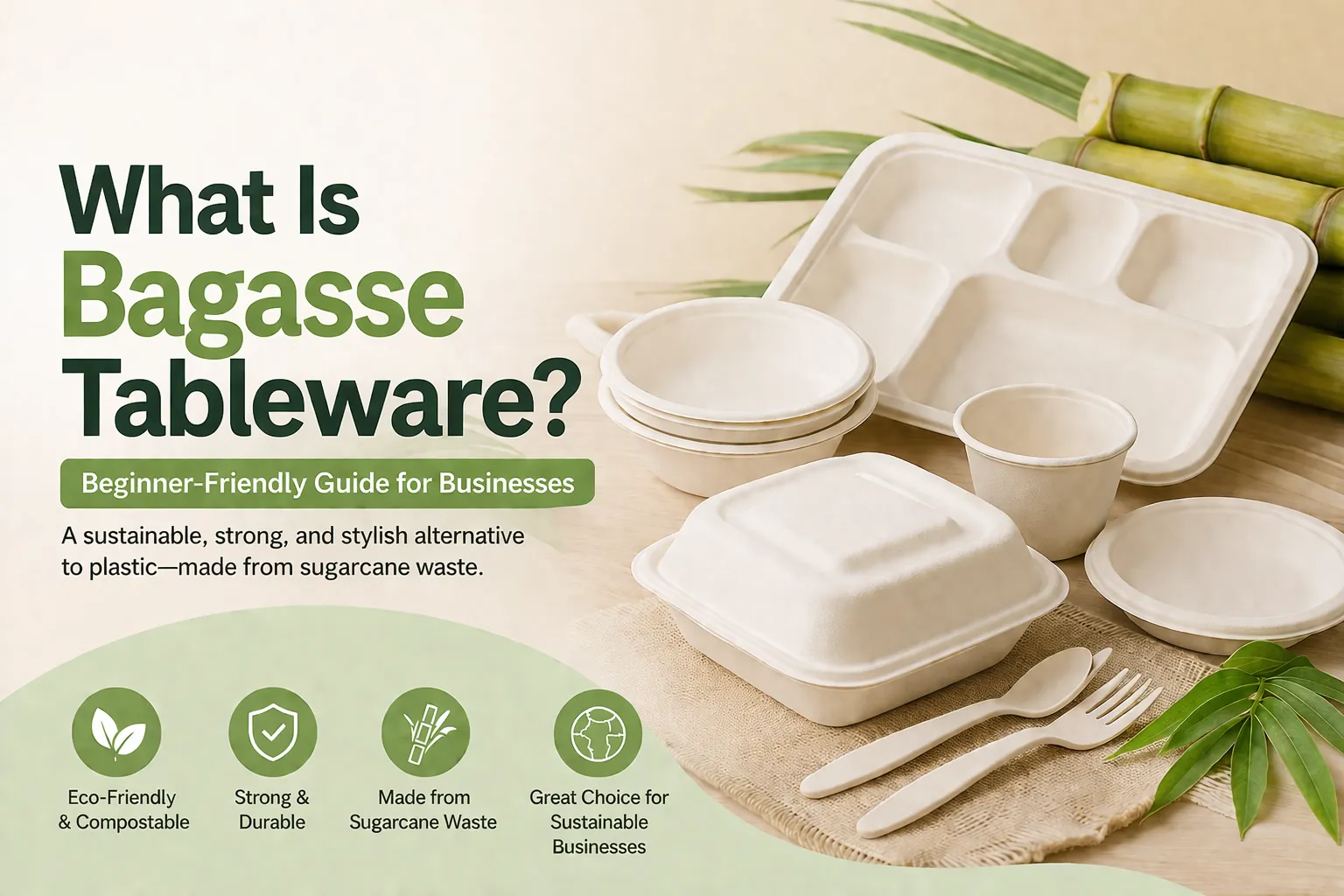
What Is Bagasse Tableware? Beginner-Friendly Guide for Businesses
A clear, non-technical explanation of bagasse tableware — what it is, how it is made, and why it has become the preferred eco-friendly alternative to plastic and paper disposables.
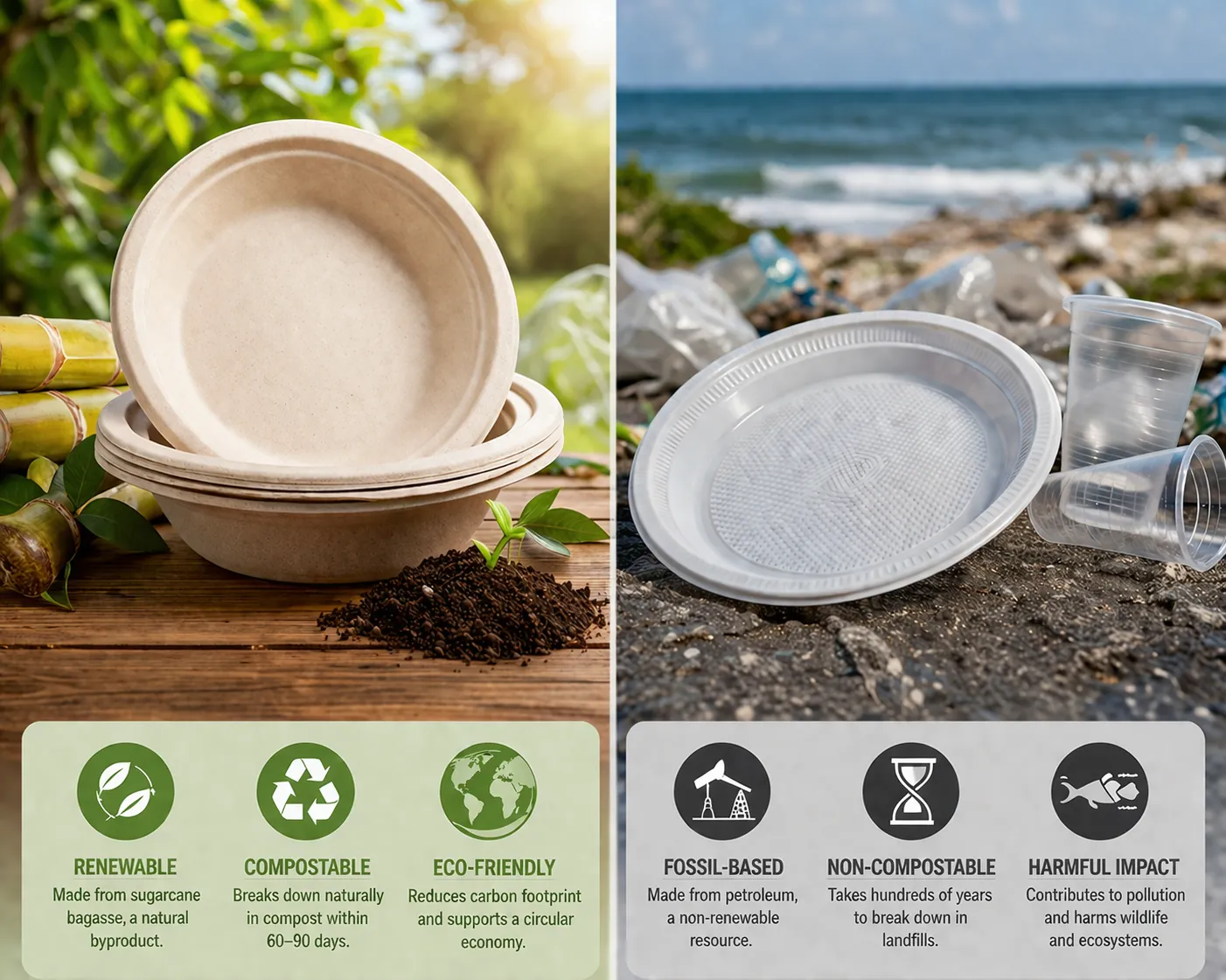
Bagasse vs Plastic Plates: A Complete Side‑By‑Side Comparison
A practical, data‑driven comparison of bagasse and plastic plates—covering performance, food safety, costs, regulations, and long‑term sustainability for food‑service businesses.
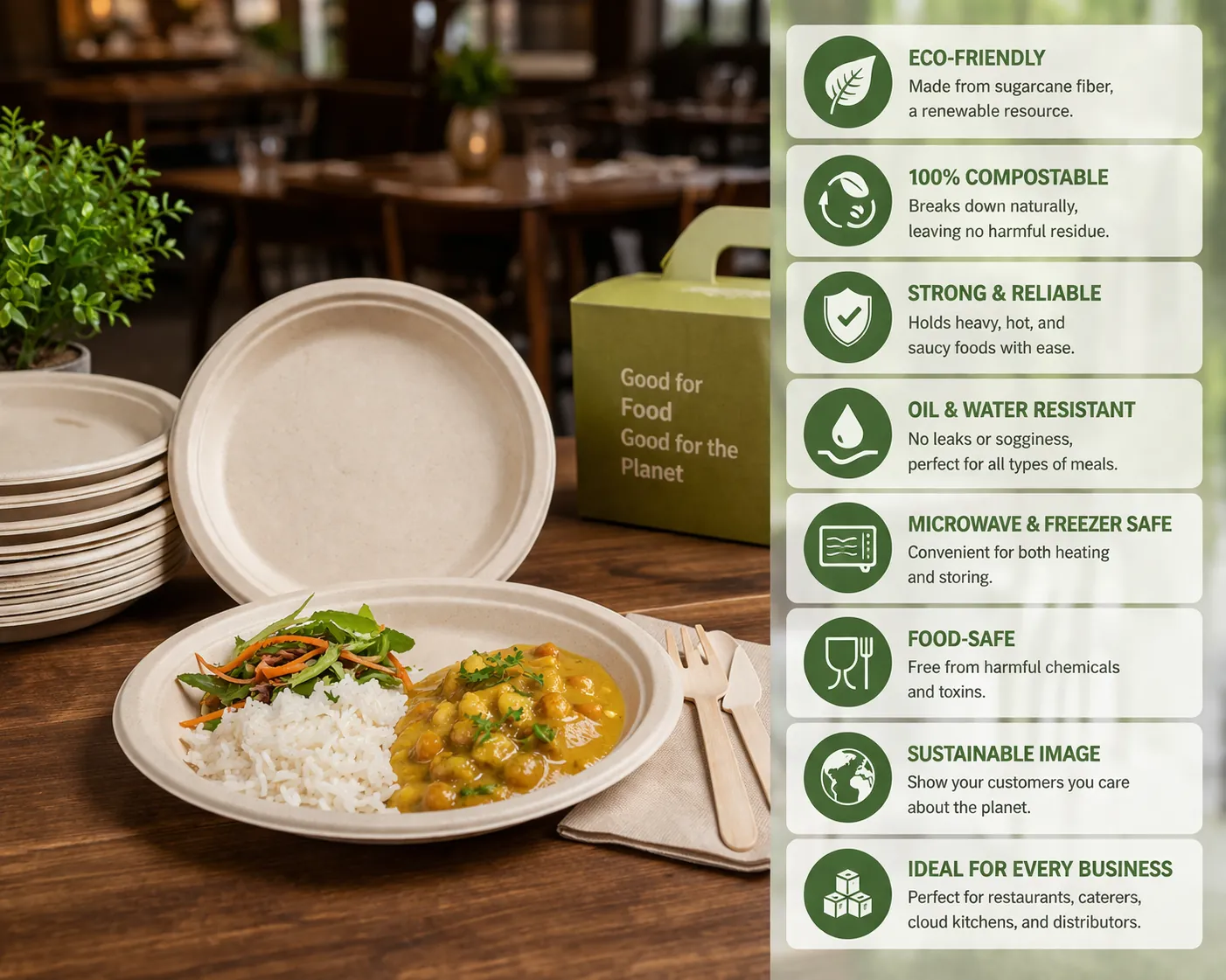
Benefits of Sugarcane Bagasse Plates for Restaurants, Caterers, and Distributors
Sugarcane bagasse plates deliver far more than eco‑credentials. Discover how they improve operations, strengthen brands, and open new market opportunities for distributors.
Ready to Transform Your Business?
Join distributors, restaurants, and catering brands worldwide already benefiting from our sustainable sugarcane bagasse solutions.