Sugarcane Bagasse Products: From Agricultural Waste to Premium Tableware
Discover how Greenmendbio transforms sugarcane agricultural waste into a comprehensive range of premium, export-quality tableware products.
What Are Sugarcane Bagasse Products?
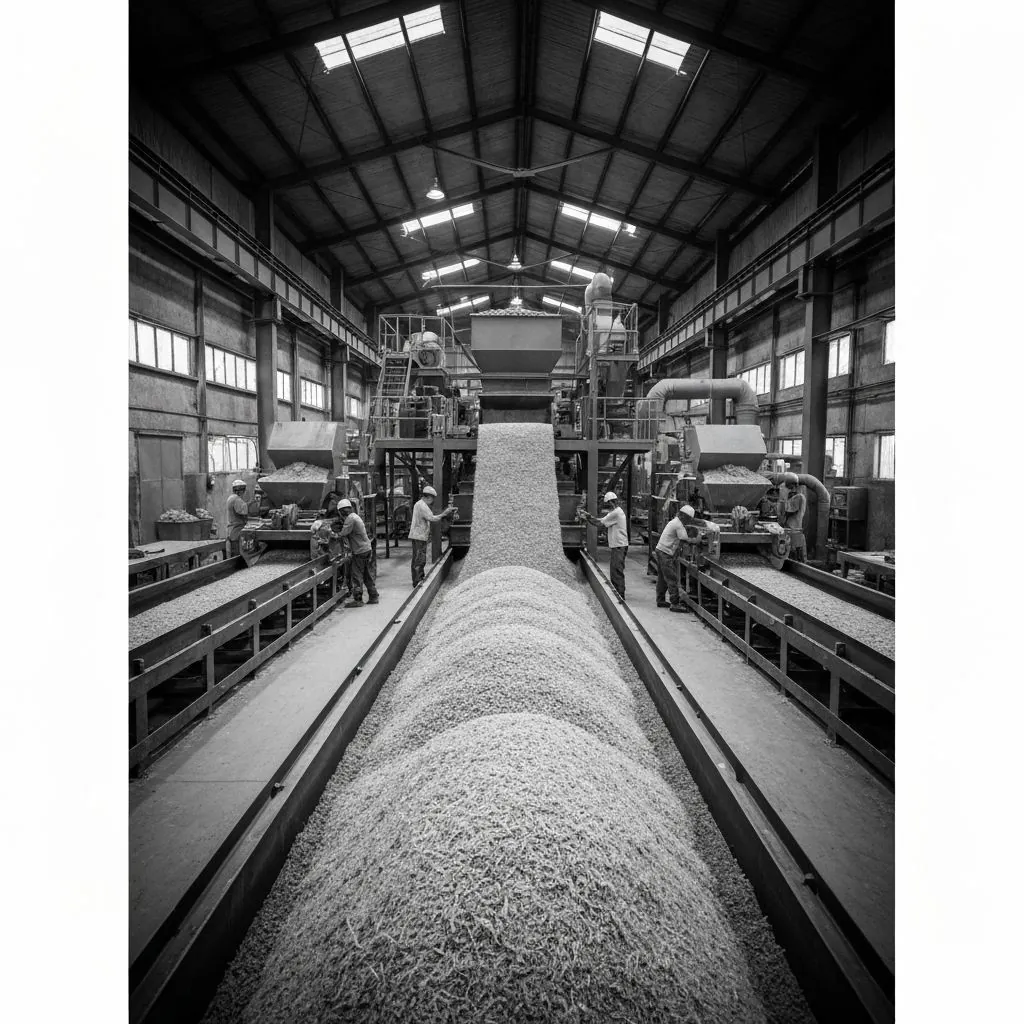
Sugarcane bagasse products are manufactured from the fibrous residue that remains after sugarcane stalks are crushed to extract their juice during sugar production. This agricultural byproduct, which would otherwise be burned or sent to landfills, is transformed through advanced manufacturing processes into premium-quality disposable tableware.
The transformation from raw bagasse to finished tableware involves five critical stages:
1. Collection & Pulping — Raw bagasse is collected from partner sugar mills across Gujarat and processed into a fine, consistent pulp through mechanical and chemical refining.
2. Bleaching & Treatment — The pulp is naturally bleached and treated to achieve food-safe standards, ensuring the final product is free from contaminants and meets FDA food-contact requirements.
3. Precision Molding — Treated pulp is formed into specific product shapes using high-temperature, high-pressure molds. This process creates the dense, rigid structure that gives bagasse tableware its exceptional structural integrity.
4. Trimming & Finishing — Molded products are precision-trimmed and inspected for quality. Edge finishing ensures clean, professional presentation.
5. Sterilization & Packaging — Products undergo UV sterilization before being packaged in food-grade materials for distribution.
Our Complete Product Range
Greenmendbio manufactures a comprehensive range of sugarcane bagasse products designed to serve every food service application:
Round Plates — Available from compact 6-inch appetizer plates to generous 10-inch dinner plates, our plate collection covers every meal service requirement. Each plate features a reinforced rim design for superior structural integrity.
Compartment Plates — 2-compartment and 3-compartment designs separate meal components, ideal for institutional catering, airline meals, and portion-controlled meal services.
Bowls & Containers — Our bowl range spans from 8oz soup bowls to 32oz serving containers, with matching lids available for takeaway operations.
Clamshell Containers — Hinged containers in burger-box, meal-box, and snack-box configurations with secure snap-lock closures and optional ventilation.
Meal Trays — Multi-compartment trays for cafeteria, airline, and institutional food service, available in 3-compartment and 5-compartment layouts.
Cutlery Set — Biodegradable cutlery including forks, knives, spoons, and combination sets that provide comparable rigidity to traditional plastic cutlery.
Every product is available for wholesale purchase with competitive pricing. Request a quote for detailed per-unit pricing and MOQ information.
Environmental Credentials
Sugarcane bagasse products represent one of the most environmentally responsible choices in the disposable tableware market:
Waste Upcycling — Every ton of bagasse tableware produced diverts agricultural waste from landfills or open burning, reducing air pollution and soil contamination in sugarcane-producing regions.
Carbon Negative Potential — The sugarcane plant absorbs CO₂ during growth, and the manufacturing process produces significantly fewer emissions than plastic production. Life-cycle analyses indicate bagasse tableware production generates 65% fewer greenhouse gas emissions compared to equivalent polystyrene products.
Complete Compostability — Unlike paper plates that may contain plastic coatings, sugarcane bagasse products are 100% compostable in both commercial and home composting environments with zero toxic residue.
Water Efficiency — Our manufacturing facility employs closed-loop water recycling systems, consuming 40% less water than equivalent paper product manufacturing.
Learn more about the specific benefits of sugarcane bagasse plates and why they outperform alternatives across every sustainability metric.
Frequently Asked Questions
What is the difference between sugarcane bagasse and regular paper?
Sugarcane bagasse is an agricultural byproduct that creates naturally strong, waterproof, and grease-resistant tableware. Regular paper often requires plastic or wax coatings for food service use, compromising its compostability.
Are sugarcane bagasse products more expensive than plastic?
Modern manufacturing has brought pricing to near-parity with conventional plastic alternatives. For wholesale orders, contact Greenmendbio for competitive per-unit pricing.
What sizes and styles of sugarcane bagasse products are available?
Greenmendbio offers a complete range including plates (6-10 inch), bowls (8-32 oz), clamshells, meal trays, and cutlery sets. Custom sizes and branding are available for bulk orders.
How should sugarcane bagasse products be stored?
Store in a cool, dry environment away from direct sunlight. Products have a shelf life of 2+ years when stored properly in their original sealed packaging.
Related Editorial
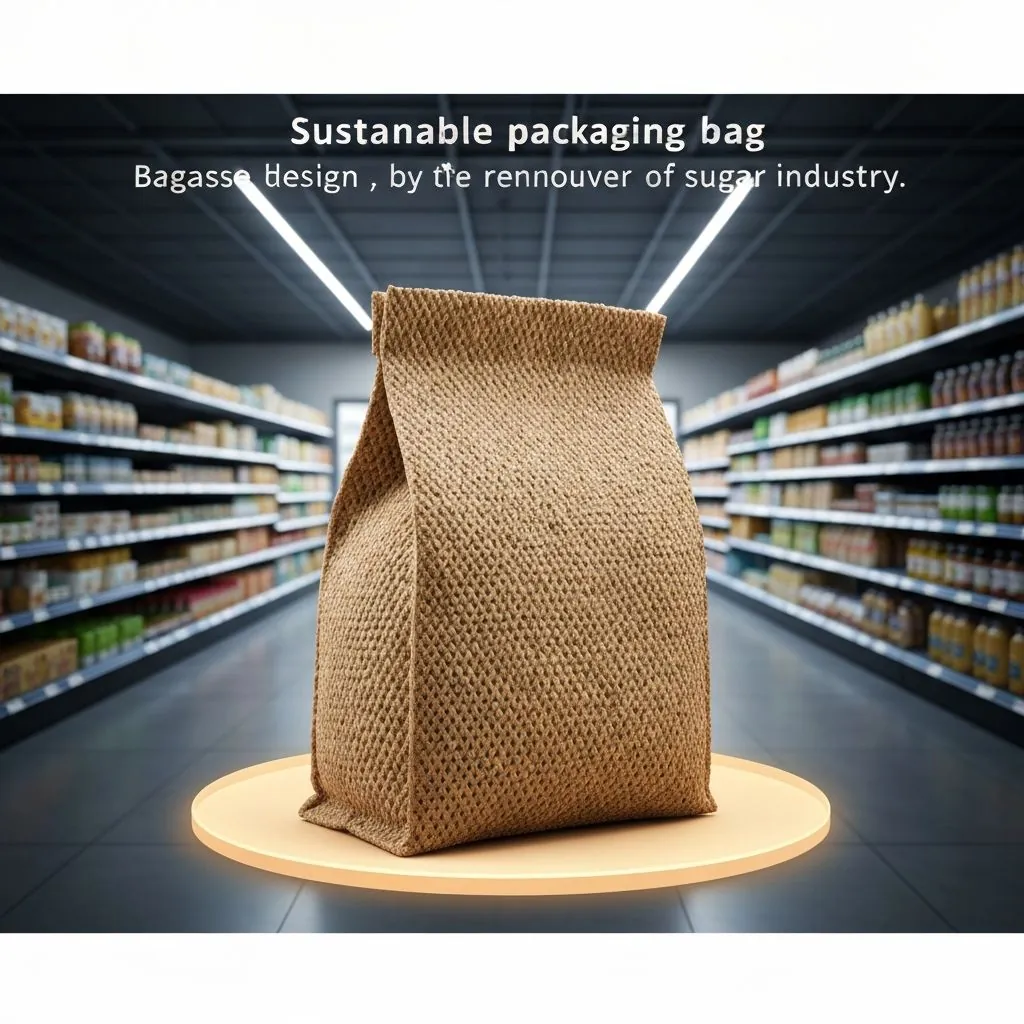
Premium Bagasse Tableware: The Complete Guide for Businesses
Everything businesses need to know about bagasse tableware — from material science to wholesale purchasing and global distribution.
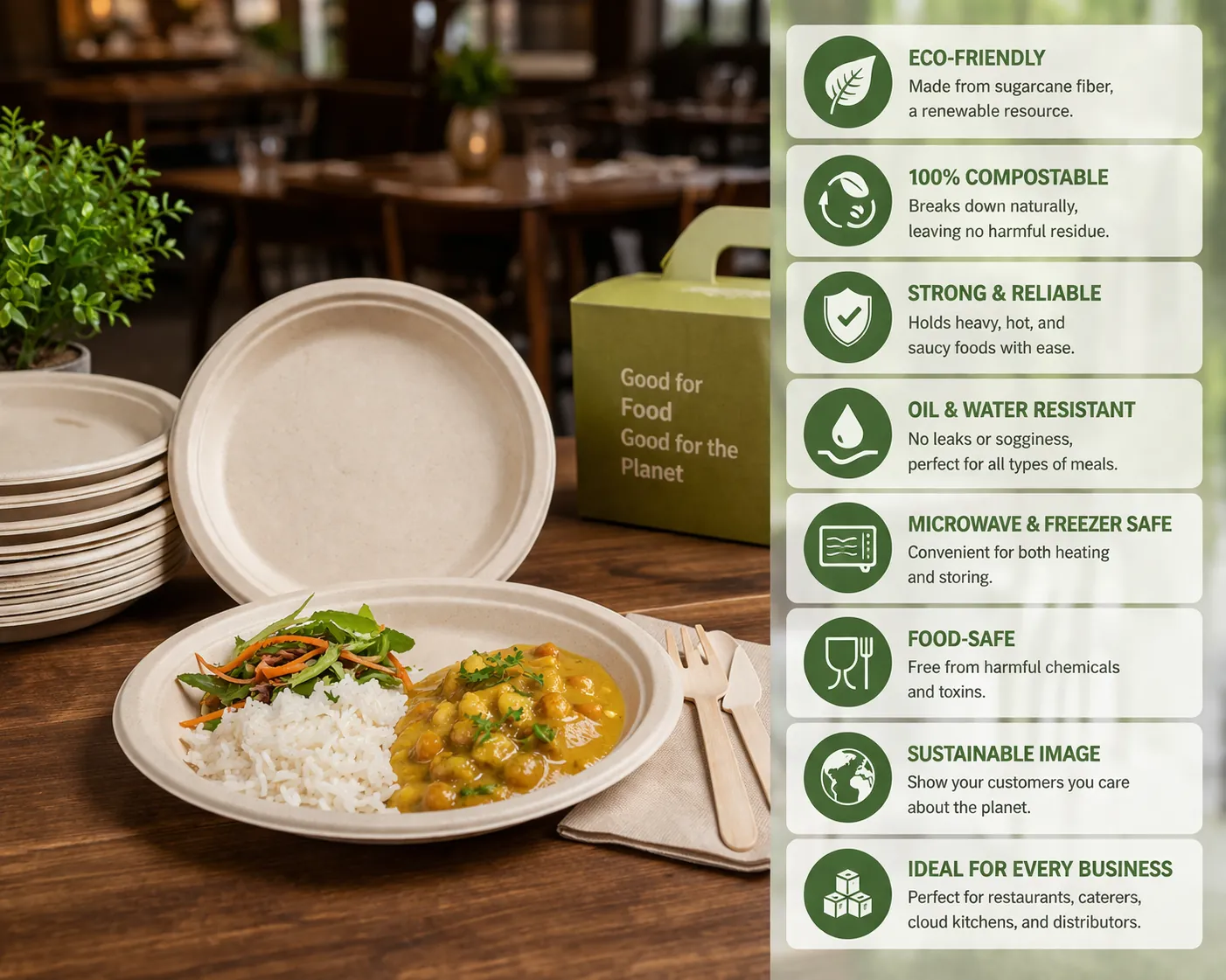
Benefits of Sugarcane Bagasse Plates for Restaurants, Caterers, and Distributors
Sugarcane bagasse plates deliver far more than eco‑credentials. Discover how they improve operations, strengthen brands, and open new market opportunities for distributors.
Ready to Transform Your Business?
Join distributors, restaurants, and catering brands worldwide already benefiting from our sustainable sugarcane bagasse solutions.